18 Aug ITHS Pilot Profile: Measuring the Fit to find the Perfect Prosthetic Socket
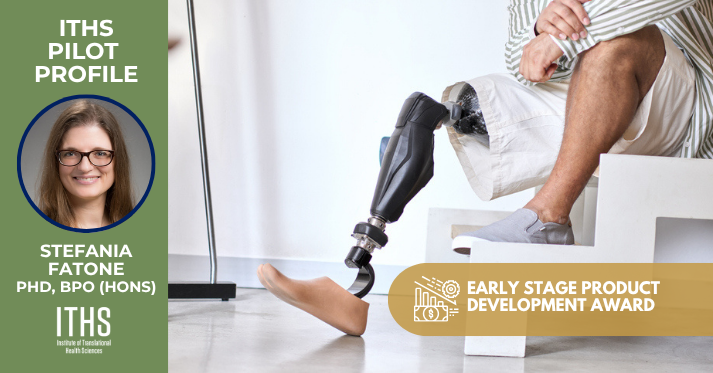
The ITHS profile & podcast series is meant to shine a deserving spotlight on individuals or programs within ITHS doing critical work across the vast spectrum of translational science. For this installment we sat down with Dr. Stefania Fatone, PhD, BPO (Hons), to discuss her 2026 ITHS Pilot Award funded project: Evaluation of a Prototype Socket Fit Testing System to Assess Coupling of The Prosthetic Socket in Individuals with Lower Limb Amputation. Her project aims to develop new ways to objectively measure how well a prosthetic socket fits with the goal of improving comfort and mobility.
Dr. Fatone is the Director of the Prosthetics & Orthotics Division as well as a professor and Associate Chair of the Department of Rehabilitation Medicine at the University of Washington School of Medicine. This interview was recorded as a podcast and is available to listen to on Spotify, Amazon podcasts, and Acast.
 Listen to the ITHS Pilots Podcast episode here.
Teddy Johnson: Hello and welcome to the ITHS Pilots Podcast, Stefania! Could you start by telling us about your pilot project and what led you to select this topic?
Stefania Fatone: Thank you for having me, Teddy! One of the biggest struggles we have as prosthetists is creating the interface between the prosthesis and the remaining part of the limb, or the residual limb. The interface has to serve many different functions such as body weight transfer between the person and the ground, provide support while standing, and transition into swing phase during movement while remaining securely attached. So, this concept of coupling is tricky because the socket has to meet all these different needs without damaging the skin from friction, rubbing, or excessive pressure. Our goal is to develop a way to objectively measure this coupling, so we can better understand how well a socket fits and how effectively it performs these functions.
Teddy Johnson: What challenges led you to design your current approach?
Stefania Fatone: I have been researching prosthetic sockets for many years, and one of the major focus areas has been developing a new socket design for individuals with transfemoral amputations. Through that work, we were successful empirically. We developed a design that we can teach other people to make, and the patients who used it were happy with the comfort level. However, I can’t measure anything about it! At the moment, we simply do not have the instruments or tools to do this either in research or in clinical care at this time. The other challenge is accessing funding. Many pilot funding opportunities are created for early career investigators. It is not readily available for experienced researchers who want to explore a completely new idea.
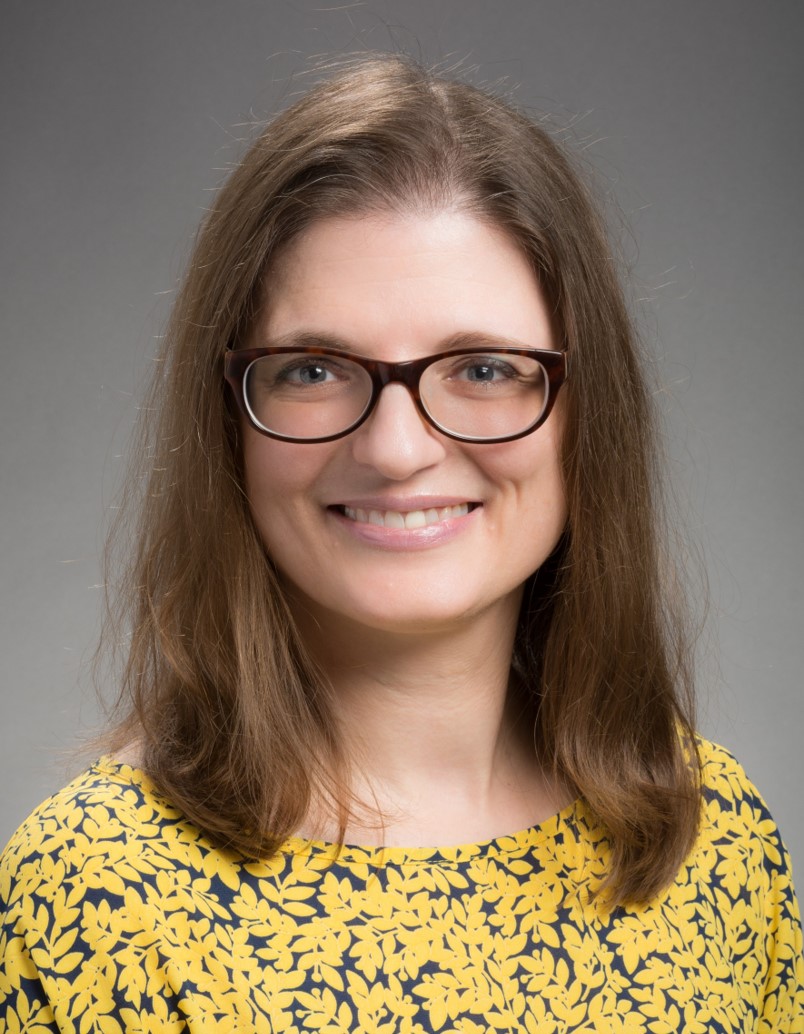
Dr. Stefania Fatone, PhD, BPO (Hons)
I had a crazy idea, and I needed someone to give me a little bit of money to see if it would work – and ITHS was that.
Teddy Johnson: How do you envision your research contributing to the broader understanding of prosthetic care?
Stefania Fatone: The first step is understanding how a well-coupled socket looks compared to an ill-fitting one. I believe this type of data can be used diagnostically. When a patient comes in, we can objectively assess the fit of their socket and decide whether it needs replacing due to poor fit. Right now, much of the decision making relies on the prosthetist’s judgement. Having quantitative data would allow us to make informed decisions and could help when navigating reimbursement challenges by providing evidence that a new socket is medically necessary.
As we begin to gather quantifiable data, we can design sockets more precisely from the beginning since we now have a clear understanding of what works. Most importantly, this approach prioritizes the patient’s needs. A well-coupled socket that functions comfortably increase mobility, independence, quality of life and satisfaction with the prosthesis.
Teddy Johnson: How can we at ITHS support researchers like you, should pilot funding support early-career investigators, or should it support new ideas?
Stefania Fatone: I think we need both. Early career investigators absolutely need pilot funding since they are often starting with new ideas and do not have years of prior experience to build on. At the same time, researchers at every stage of their career need opportunities to explore novel areas. The reality is that we all have new ideas we want to explore, but the challenge is figuring out how to get them funded.
For example, one project may generate the data needed to move to the next project. However, I cannot start anything new or completely different due to the lack of resources needed to begin the project. Pilot funding provides the opportunity to test whether an idea has merit and bring it to fruition if it does. I had a crazy idea, and I needed someone to give me a little bit of money to see if it will work – and ITHS was that.
Pilot funding provides the opportunity to test whether an idea has merit and bring it to fruition if it does.
Teddy Johnson: Thank you, Stefania, for joining us and for sharing your work!
This interview has been edited for length and clarity. Click here to listen to the full episode.