







ITHS Tools
Login
Need Help? Have a Question?
Connect with Us

Preliminary Framework Development for Mentorship in Community Violence Intervention Programs

Preliminary Framework Development for Mentorship in Community Violence Intervention Programs

TRANSLATIONAL SCIENCE BENEFITS MODEL PROFILE

Summary

Firearm violence has a devastating impact on Black youth in the United States. Recent statistics indicate that while Black youth represent 15% of the youth population in America, 47% of firearm deaths occur among Black youth, representing one of the highest causes of mortality in this community1-2. Mentorship among elders who have experience with firearm violence and Black youth at risk of morbidity or mortality due to firearm violence is mixed, however some programs in certain settings (e.g. one-on-one meetings and longer interventions) have shown reductions in firearm related assaults.

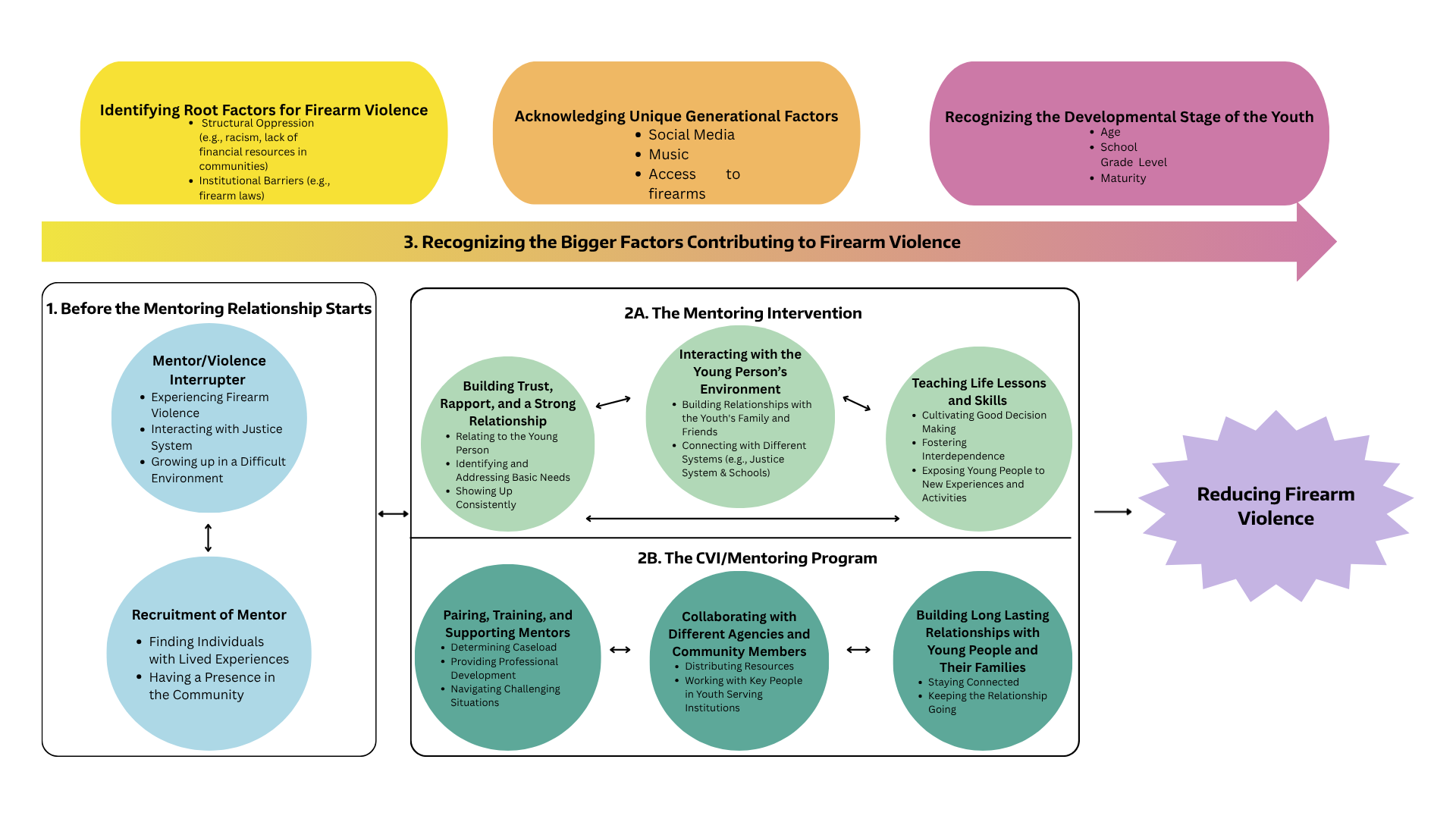
This study looked at what makes Community Violence Intervention (CVI) mentoring programs and youth development programs work to reduce firearm violence assaults among at risk youth. Researchers interviewed 20 mentors and program leaders in CVI programs across Washington State to identify which factors within mentoring relationships are most effective, with the goal of finding what helps these programs keep young people, especially Black youth, safe from firearm violence. The findings were used to build a qualitative framework based on participants perspectives on what makes an effective intervention. Critical to effective interventions is consideration of relationships among mentors and mentees, identifying root causes, acknowledging generational factors, acknowledging the age and stage of the mentee, factors in place prior to the start of the mentoring relationship, the mentoring intervention, and the CVI mentoring agency.

The following is the preliminary framework resulting from this study (click image to enlarge):

Significance

Firearm violence is one of the leading causes of death among Black youth in the United States. Community Violence Intervention programs take advantage of mentors with lived experience to help protect young people in their communities. But we don’t know enough about what makes these programs work. This study helps fill that gap by showing what effective mentoring actually looks like in practice.

Benefits

  • Demonstrated benefits are those that have been observed and are verifiable.
  • Potential benefits are those logically expected with moderate to high confidence.

This study provides research methods that can be used to learn more about how mentoring affects the health and well-being of young people exposed to firearm violence.
Potential.

Clinical Benefits:

Understanding how CVI programs provide support helps build more effective programs that are tailored to specific communities.
Demonstrated.

Community Benefits:

Collaboration between researchers and community members with lived experience helps create more effective programs.
Demonstrated.

Community Benefits:

Shows how mentoring programs can help reduce firearm violence among young people in communities most affected by it.
Demonstrated.

Community Benefits:

Understanding the components of effective CVI programs help create more effective programs that help at risk youth access equitable health care.
Demonstrated.

Community Benefits:

Understanding the components of effective CVI programs help create more effective programs that help mentors deliver equitable health care.
Demonstrated.

Community Benefits:

Findings from this study can be used to train mentors and program staff to better support young people at risk.
Potential.

Community Benefits:

Understanding the most effective mentoring practices may help young people avoid violence, improving both how long and how well they live.
Potential.

Community Benefits:

A clearer framework for mentoring can help CVI programs get better results without spending more money.
Potential.

Economic Benefits:

Better mentoring programs that prevent firearm violence could lower healthcare and social service costs for communities over time.
Potential.

Economic Benefits:

Reducing firearm violence through better mentoring could lower the social and financial costs of violence in affected communities
Potential.

Economic Benefits:

This study includes the voices and experiences of mentors and program leaders from the community, which can directly shape how CVI programs are designed.
Potential.

Policy Benefits:

This study produced a peer-reviewed paper in Prevention Science that other researchers and program leaders can build on.
Demonstrated.

Policy Benefits:

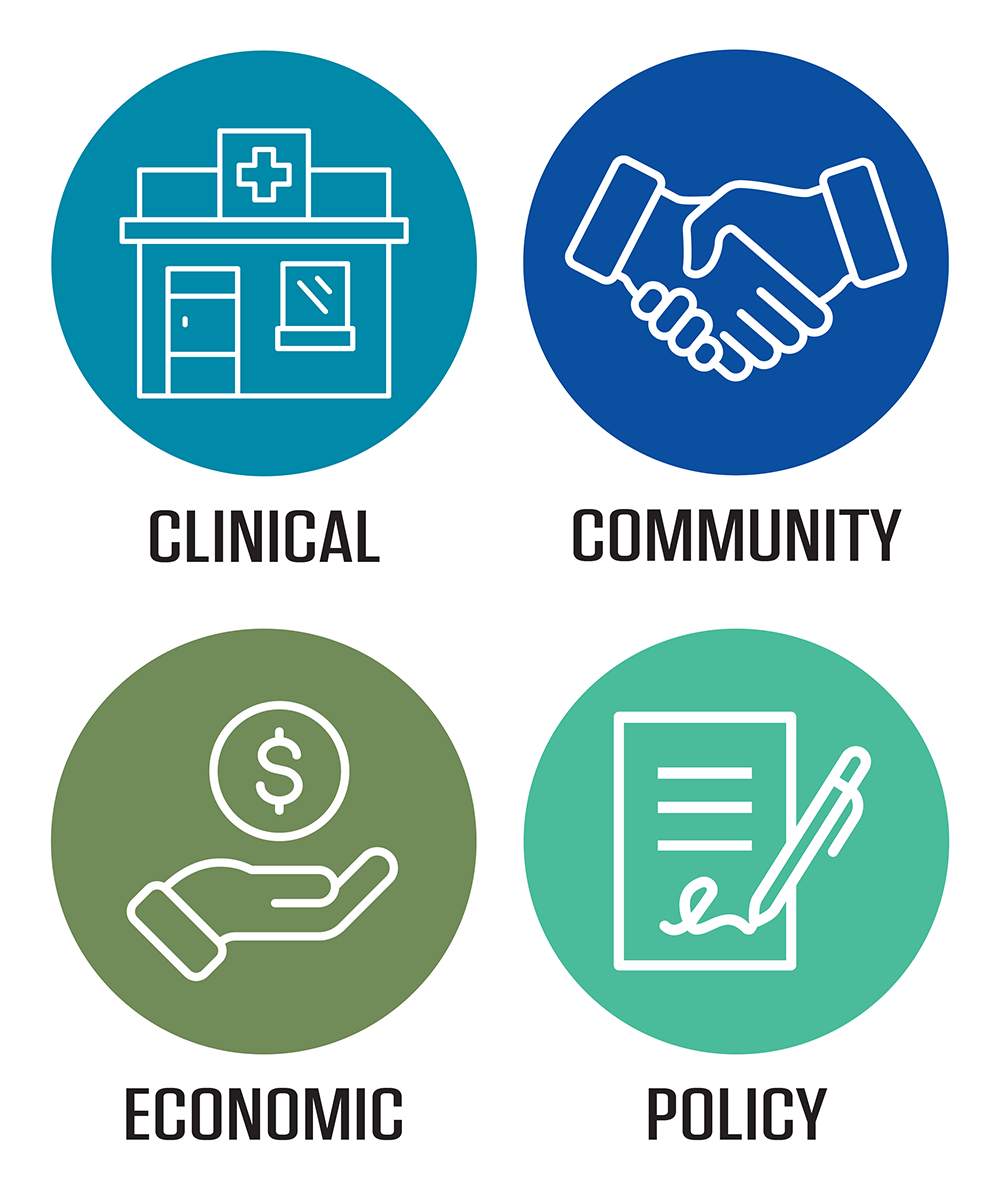
This research has clinical, community, economic, and policy implications. The framework for these implications was derived from the Translational Science Benefits Model created by the Institute of Clinical & Translational Sciences at Washington University in St. Louis.

Funding

The Institute of Translational Health Sciences, and grant number KL2 TR1002317 supported the research component of this project. No part of this funding supported advocacy or legislative influence activities.

References

Research Team

  • Kristian Jones (Primary Contact), Center for Firearm Injury Prevention, School of Social Work, University of Washington
  • Jarvis Duckworth, School of Social Work, University of Washington
  • Chloe Fetters, School of Social Work, University of Washington
  • Biruktawit Galoro, School of Social Work, University of Washington
  • Ali Rowhani-Rahbar, Center for Firearm Injury Prevention, University of Washington