25 Sep ITHS Profile: Bridging Health Care Gaps Through Technological Innovation
In this installment of the ITHS profile series, we sat down with Tae Jones, a former ITHS TL1 Trainee and current PhD candidate at the University of Washington Paul G. Allen School of Computer Science and Engineering, where she specializes in Health Human-Computer Interaction (HCI). We connected with Tae to learn more about her research, her experience in the TL1 program , and her work on the SCOPE Project, A Pragmatic Study Examining Technology-Enhanced Collaborative Psychosocial Care in the Cancer Setting.
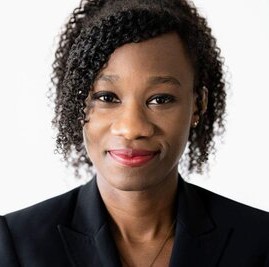
Tae Jones, PhD candidate and fmr TL1
Thank you for joining us, Tae! Could you start by sharing a little bit about your educational background?
I am now in Seattle, working on my PhD in Computer Science & Engineering at the University of Washington. But I wasn’t sure what I wanted to do when I started college, so I began with genetics because I enjoyed studying the human body. I eventually moved onto studying nursing then psychology, and eventually, my dad pulled me aside and said, “You better graduate!” So, I earned my undergraduate degree in information systems and then went on to earn my master’s degree in health management and informatics from Kennesaw State University in Georgia.
And what inspired you to pursue your current field of study?
I would say that my parents were truly the biggest inspiration for my current field of study. My father is a computer programmer, and my mother is a nurse. My father has had multiple long-term illnesses, and every time he received a new diagnosis, my mom would adapt her nursing career to make sure he received the best care possible. Growing up, I thought this type of personalized care was normal. It wasn’t until I got into the real world that I realized most people do not have access to that level of care, and it shouldn’t depend on someone like my mother stopping everything to provide it. This led me to believe that there must be a way for technology to help bridge that gap so patients can get better care while doctors and families can focus on other things. I am really a product of both my parents’ careers in technology and health care.
Tell us about the SCOPE project, which you’re a big part of right now.
SCOPE, in collaboration with Fred Hutch, focuses on patients with terminal cancer who are also experiencing anxiety, depression, or other mental health challenges. A major challenge in treating patients with cancer is that health care providers often focus on the physical aspects of cancer without addressing the mental health side, even though those issues can compound each other. Ultimately, we want to help patients and their clinical social workers collaborate with ease to share information and improve coordinated care. The goal was to see whether technology and a collaborative care model could improve care for these patients. In the model, the patient is at the center, and the care team communicates and works together to make better decisions using real-time information.
What has your role been in the SCOPE project?
The project had already been running for about three years when I joined it. The team had already conducted interviews, studied the clinicians’ workflows, and completed an initial deployment. I came in around the first iteration and helped finish the interviews and analyze what was and wasn’t working. Based on that analysis, we made changes to the protocols, workflow, and technology and then deployed it again. The goal was to ensure this technology works with the clinicians’ workflow. We went through several iterations of interviewing, testing, making modifications, and re-deploying. I was involved in the final two iterations. My dissertation builds on this project and others by looking at why people disengage from interventions, and more importantly, how we can keep them engaged. With SCOPE, we realized that the social worker was really the driver of engagement because of how the intervention was designed. So, my research looks at how engagement depends on the goals of a study and the people involved. I am very focused on advocating for patients. And I see myself as a patient-centered researcher.
The ITHS TL1 Program expanded how all of us thought about research.
What kind of impact would you like this research to have?
Some of the impact of SCOPE was already visible while we were doing the research, which was amazing. I interviewed patients who were using the technology, and a few of them told me, “I don’t use this anymore.” When asked the reasons, they said, “Because it worked. I felt great.” And that is the actual goal. We don’t want people to need this technology forever.
We also found that this technology helped patients and social workers use their sessions more effectively. We saw improvements in communication and patients’ well-being. What I really like is that these lessons can be applied beyond cancer and depression to other areas of health care.
As a member of the 2023-24 cohort, what did you most enjoy about your TL1 experience?
One of my favorite parts of the ITHS TL1 program was my practicum with Corey Snelson, PhD, MPH, the ITHS Director of Evaluation. It was a great experience because I learned how research can influence processes and policies. We worked so well together that I eventually asked her to be on my PhD dissertation committee, and she continued to mentor me throughout my PhD program. So, I really valued the connections I made through this program and the opportunity to experience a part of the discipline that I hadn’t had access to before.
What specific aspects of the TL1 program were the most helpful for you?
I really enjoyed collaborating with the other trainees because we were all working in very different fields. One activity required us to learn about someone else’s research and develop ideas for how they could move their project forward. You really had to understand their work, but you also got to bring your own perspective into it. I remember bringing some of my behavioral research into someone else’s project, even though that wasn’t something they had originally considered. The ITHS TL1 Program expanded how all of us thought about research. We can become very narrowly focused on our own problems, so being exposed to other disciplines showed us what we could bring into our own work to create more holistic solutions.