25 May EXPO 26 Lightning Talks: Being at the Intersection of Engineering and Medicine
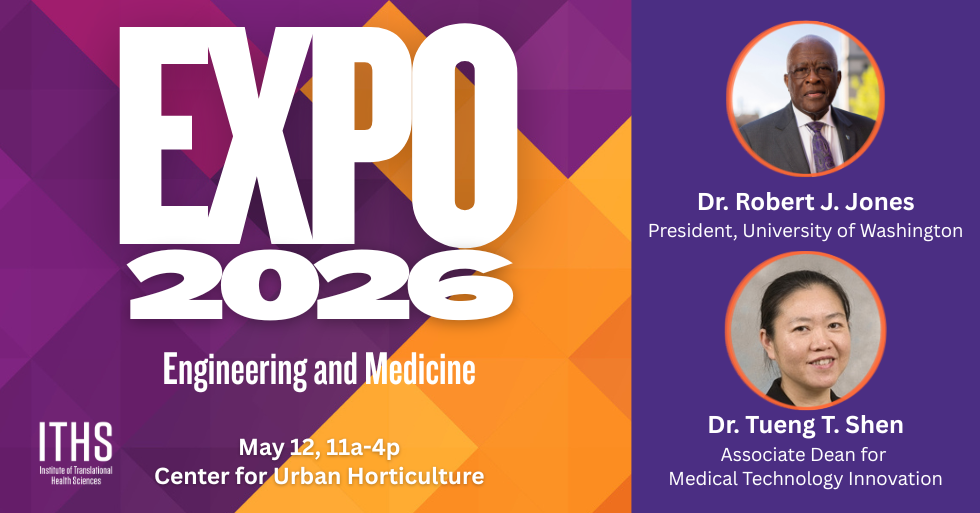
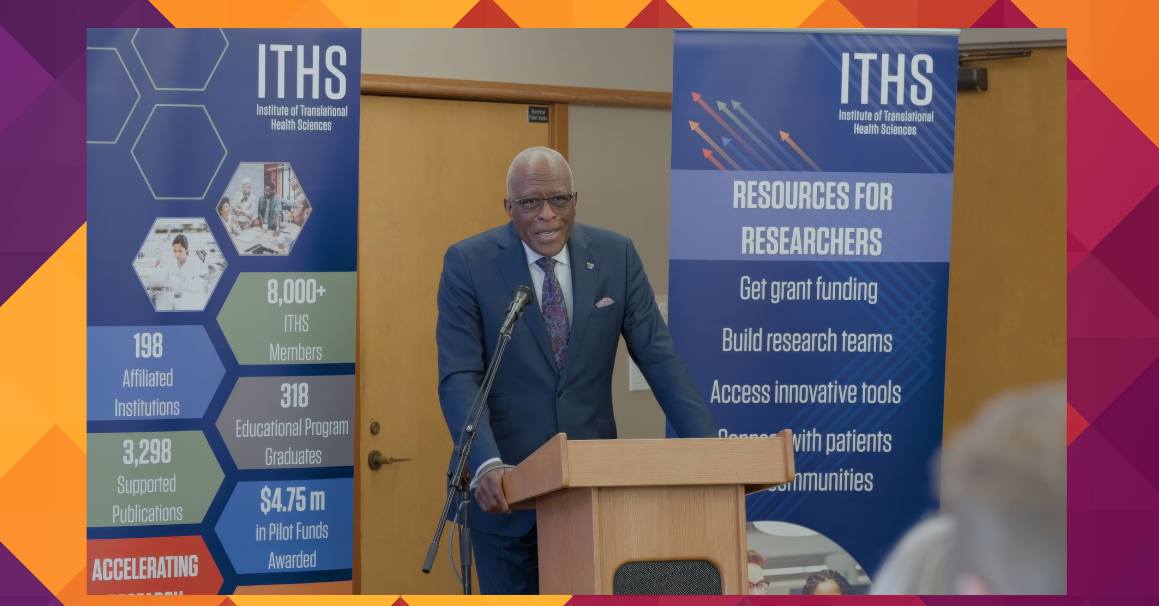
ITHS put engineering and medicine in the spotlight with all the speeches, lightning talks, and presentations featured at EXPO 26. This year’s event was full of highlights – from the president of the University of Washington, Dr. Robert Jones, giving the keynote, to Dr. Tueng Shen giving a remarkable translational science talk alongside colleagues at the Kren Engineering-based Medicine Initiative (KEMi).
This year’s translational science focused on novel technologies designed to support medical professionals. Nathan White, M.D. M.S, discussed how to minimize risks relating to intubation. Xunqi Zhang, MS, Ph.D. student (MSE) talked about bioresorbable uterine sensors designed to continuously monitor ultrasensitive cytokine during high-risk pregnancies without utilizing any invasive procedures. [See talks below]
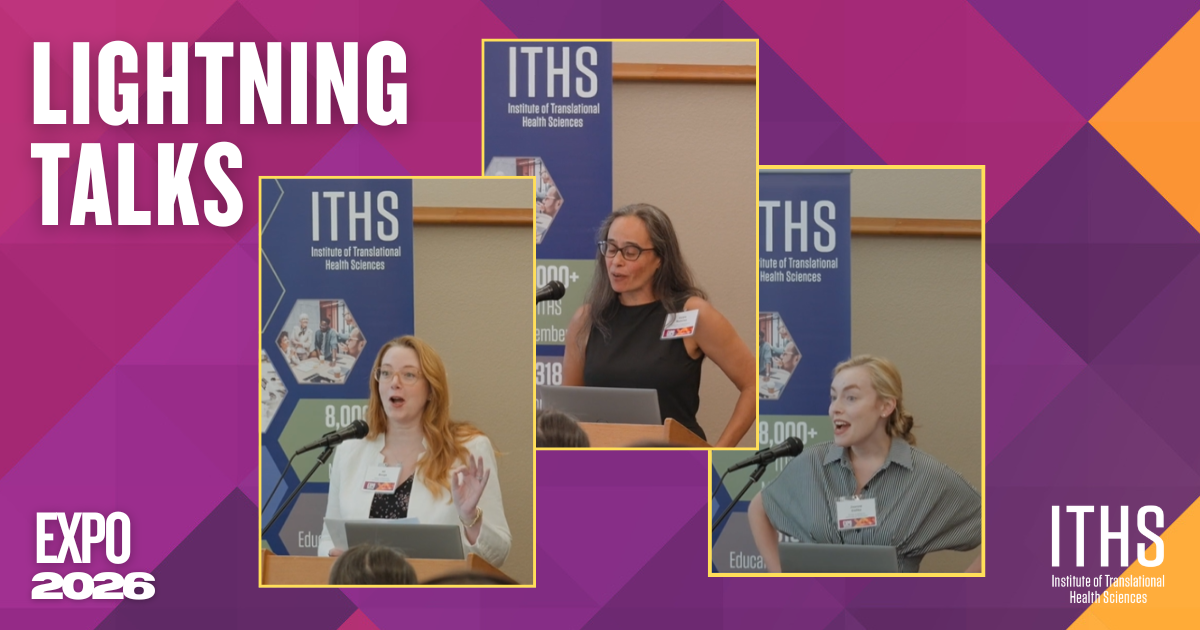
Our lightning talks featured several notable innovators: Ali Bouge, MS, RAC, Vickie Ramirez, MA, and Jeanne Gallée, PhD, CCC-SLP. Both Ramirez and Dr. Gallée are previous ITHS Pilot Award recipients, and Bouge is a colleague of Teddy Johnson, Director of the ITHS Technology Development Center (TDC) and Dave Hammond, a TDC Senior Regulatory Consultant, through the University of Washington School of Pharmacy BRAMS Program. Their work spans regulatory science, integrated human and veterinary healthcare, and the use of prosody to improve quality of life for those who have experienced stroke and neurodegenerative disease. Below are highlights and key insights from their presentations.
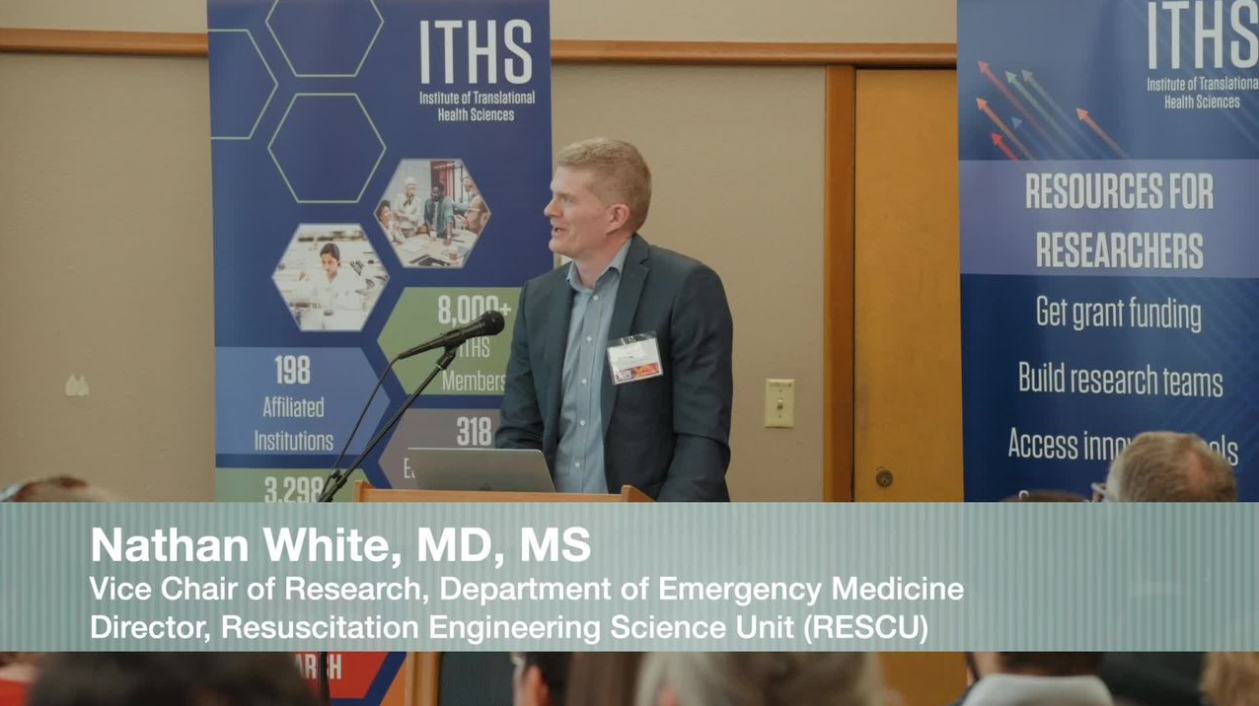
Real Time Machine Vision to Enhance Emergency Intubation
Nathan White, M.D., M.S
Dr. Nathan White shared research behind the video laryngoscopy for endotracheal intubation, an incredible engineering innovation that helps physicians and paramedics insert a breathing tube when they are unable to breathe on their own. Building on existing technology, Dr. White’s team is using AI and computer vision to quickly identify the airway, allowing medical professionals to complete the procedure rapidly and safely. The video laryngoscopy has the potential to minimize time-sensitive and high-stress situations relating to intubation, especially in environments outside of controlled settings like the operating room or emergency department.
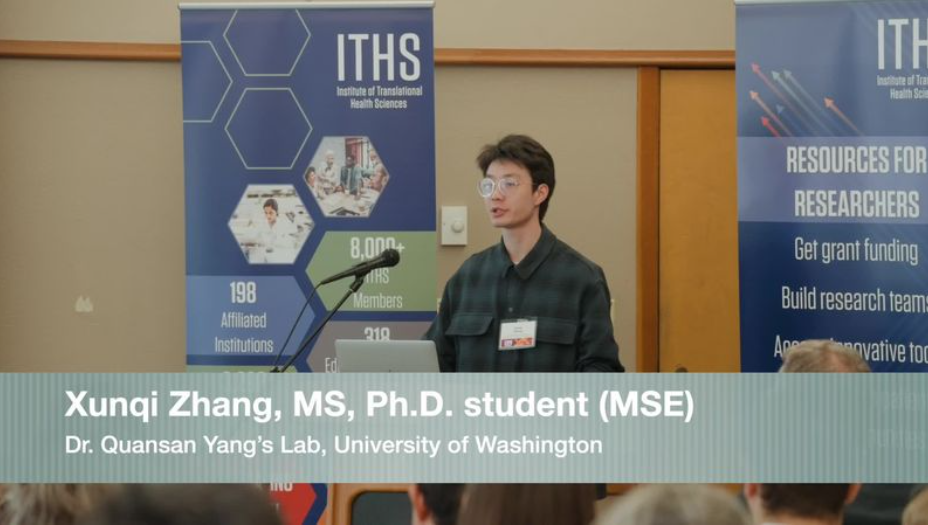
Millimeter-Scale, Bioresorabable Uterine Sensors for Real-Time, Ultrasensitive Cytokine Monitoring During High-Risk Pregnancies
Xunqi Zhang, MS, Ph.D. student (MSE)
Xunqi Zhang, a Ph.D. student in Dr. Quansan Yang’s lab, presented research on a novel biosensing technology designed to continuously monitor key inflammatory biomarker IL-6, with the goal of improving monitoring during high-risk pregnancies. Working with other researchers at the University of Washington, Dr. Yang’s team developed a pH-responsive protein binder that allows for continuous and ultrasensitive detection of IL-6. The team also developed wearable technology with the potential to monitor this key biomarker without invasive blood drawing.
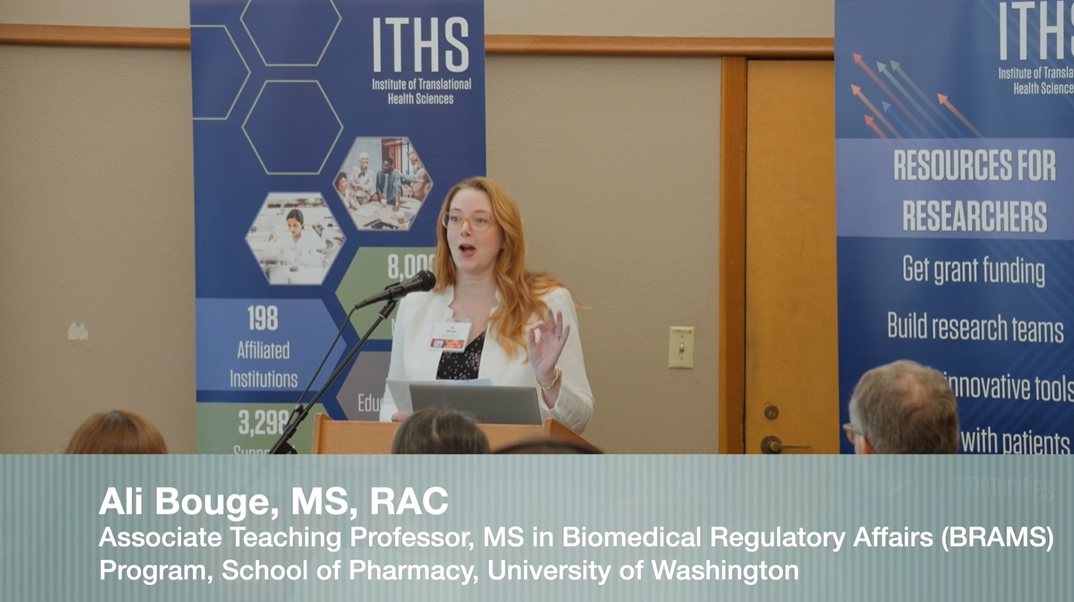
Master’s Program in Biomedical Regulatory Affairs
Ali Bouge, MS, RAC
Ali Bouge discussed how the University of Washington’s Biomedical Regulatory Affairs Master’s Program (BRAMS) helps bridge the gap between scientific discovery and patient care. Through hands on practicum projects that immerse students in real-world environment, the program provides resources to help investigators navigate the complex regulatory pathway maze and accelerate the translation of new therapies, medical devices, and healthcare technologies to clinical care. The BRAMS program is led by David Hammond, MS, RAC, CCRP, and Hammond also serves as a Regulatory Consultant & Advisor within the ITHS Technology Development Center.
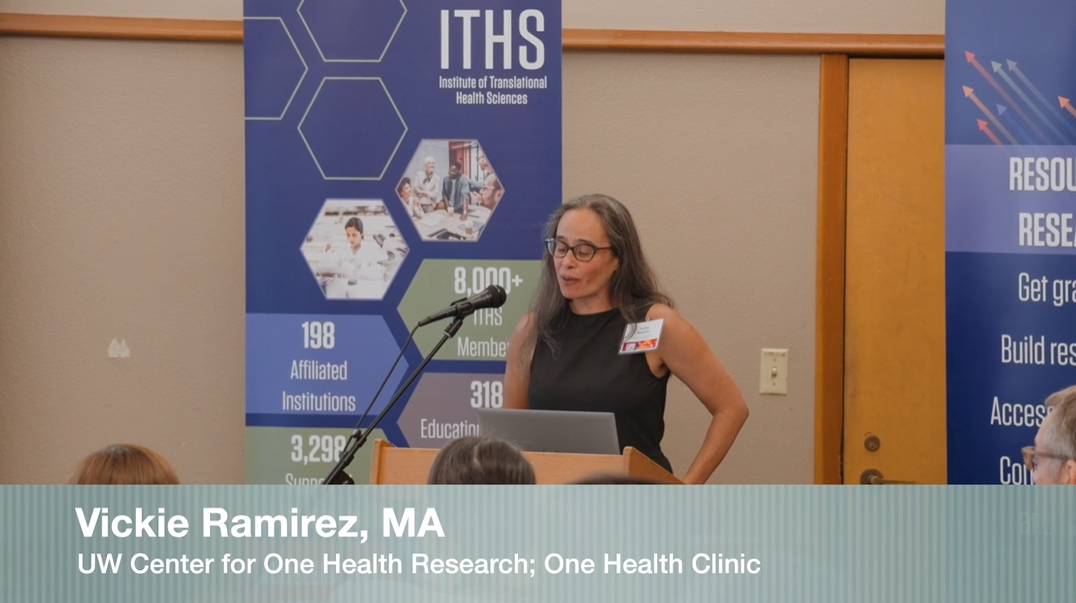
Healthcare through the Human-Animal Bond: Integrating Human and Veterinary Health Care for Unhoused Populations
Vickie Ramirez, MA
Vickie Ramirez presented research on how the human and animal bond can serve as a healthcare access point for people experiencing houselessness. She discussed the ways in which One Health Clinic, a collaborative initiative that integrates human and veterinary care, connects people with essential medical services by addressing the veterinary needs of their pets. The idea of One Health was integrated into academic research from indigenous traditional ecological knowledge in the 1960s. It examines the intersections of humans, animals, and environmental health as well as how they are inextricably linked. Ramirez also shared plans to expand this work, supported by an ITHS Academic Community Partnerships Award, in the coming year and integrate medical care into unhoused communities in King County, Washington.
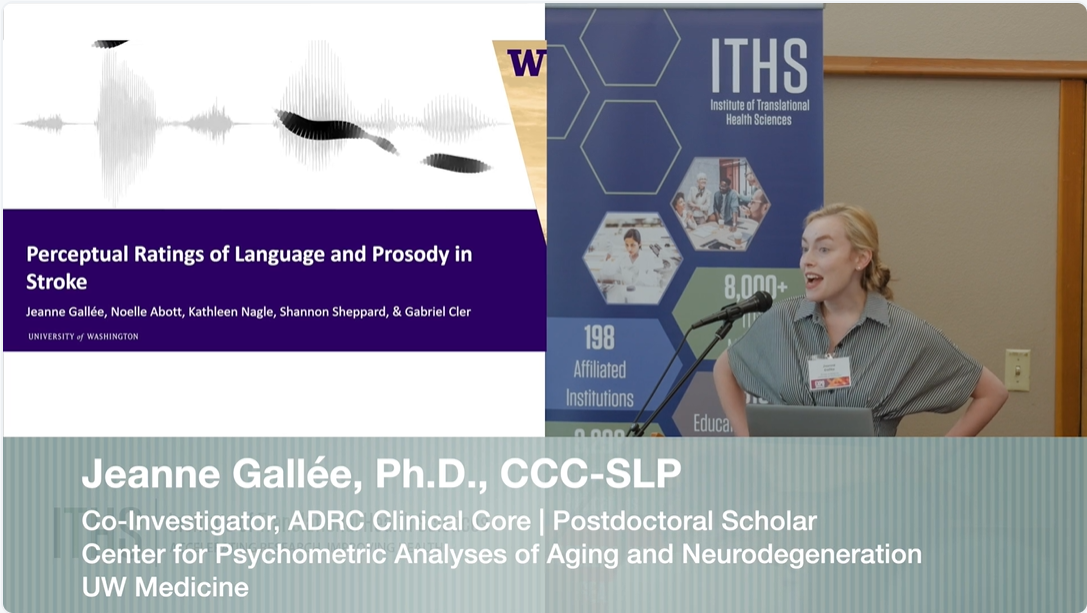
Acoustic Characteristics of Prosody in Stroke and Neurodegenerative Disease
Jeanne Gallée, PhD, CCC-SLP
Dr. Jeanne Gallée presented emerging research on how speech naturalness is perceived in individuals affected by stroke and how listeners value both the content and the method of speech delivery. By examining how listeners perceive language and speech patterns, her team aims to better understand communication challenges associated with stroke and neurodegenerative disease. Gallée’s findings could contribute to improving future assessment tools and new therapies that support better quality of life for patients experiencing these conditions.