









ITHS Tools
Login
Need Help? Have a Question?
Connect with Us
SCOPE: A Pragmatic Study Examining Technology-Enhanced Collaborative Psychosocial Care in the Cancer Setting

SCOPE: A Pragmatic Study Examining Technology-Enhanced Collaborative Psychosocial Care in the Cancer Setting

TRANSLATIONAL SCIENCE BENEFITS MODEL PROFILE

Summary

Previous research¹ demonstrates a significant increase in the prevalence of depression in cancer patients with concomitant decrease in quality of life. Treatment of comorbid cancer and depression can be very complicated under the best circumstances, with the potential for these conditions to be exacerbated by lack of consistent, tailored care. Preliminary studies have demonstrated behavioral improvements using a Collaborative Care Management approach², however patients struggle to navigate multiple care journeys³. The SCOPE project aims to build upon the Collaborative Care Management model to equip both patients and providers with a method to approach care for patients with dual diagnoses by adding a technology solution that allows patients and providers to communicate more freely.

Significance

Integrating behavioral health treatment with cancer treatment offers many benefits to patients and their care providers, including increases in quality of life during and after cancer treatment. The SCOPE project adds to potential positive outcomes by creating a mobile app that allows all patients, including those living in rural areas, with timely treatment for depression symptoms.

Translational Science Solution

The SCOPE study addresses several of NCATS Translational Science Principles, specifically by addressing an unmet need through the development of an app that can access patients no matter their location. This technology can also be used to treat a number of conditions where counseling is at the core, which includes multiple behavioral conditions. Additionally, the SCOPE project is dependent on expertise from various different disciplines including computer science, engineering, psychiatry, and social work.

Benefits

  • Demonstrated benefits are those that have been observed and are verifiable.
  • Potential benefits are those logically expected with moderate to high confidence.

The Six Building Blocks program materials provide guidance on identification of opioid use disorder and co-occurring medical and mental health conditions that can impede management of chronic pain into standard care.
Demonstrated.

Clinical Benefits:

The Six Building Blocks program has been included in guidance on managing patients with chronic pain using long-term opioid therapy from SAMHSA, CDC, the Providers Clinical Support System, and the Washington State Medical Association.13–16
Demonstrated.

Clinical Benefits:

This study investigates the challenges faced by patients with both cancer and depression.
Demonstrated.

Clinical Benefits:

Improved outcomes for patients with comorbid cancer and depression may influence the creation of new guidelines.
Potential.

Clinical Benefits:

Information gathered from patient information entered into the registry allows providers to tailor therapeutic procedures for individual cases.
Demonstrated.

Clinical Benefits:

The SCOPE project investigates technology-enhanced collaborative care using a new patient-facing mobile app.
Demonstrated.

Clinical Benefits:

The SCOPE project uses a new app for patient-provider communication and tailored intervention.
Demonstrated.

Clinical Benefits:

The project supports the health and wellbeing of cancer patients in the Puget Sound area with the hope of expansion to other geographies.
Demonstrated.

Community Benefits:

SCOPE is a phone-based app that supports the appropriate delivery of care for patients with both cancer and depression.
Demonstrated.

Community Benefits:

As SCOPE is a mobile-based technology, it may be able to support better treatment for patients in rural areas.
Potential.

Community Benefits:

The SCOPE app can deliver health care resources remotely to a high number of patients with the goal of improving the quality of care.
Potential.

Community Benefits:

The SCOPE app can deliver health care resources remotely to a high number of patients with the goal of improving the quality of care.
Potential.

Community Benefits:

The SCOPE app was designed to provide appropriate care to patients with comorbid diseases which are often treated separately.
Potential.

Community Benefits:

Concomitant mental health treatment for cancer patients is expected to improve quality of life.
Demonstrated.

Community Benefits:

Coordinated care may result in cost savings to both patients and healthcare systems.
Potential.

Economic Benefits:

Coordinated care for comorbid conditions of cancer and depression may result in decreased system costs.
Potential.

Economic Benefits:

The SCOPE project has generated scientific research papers and presentations.
Demonstrated.

Policy Benefits:

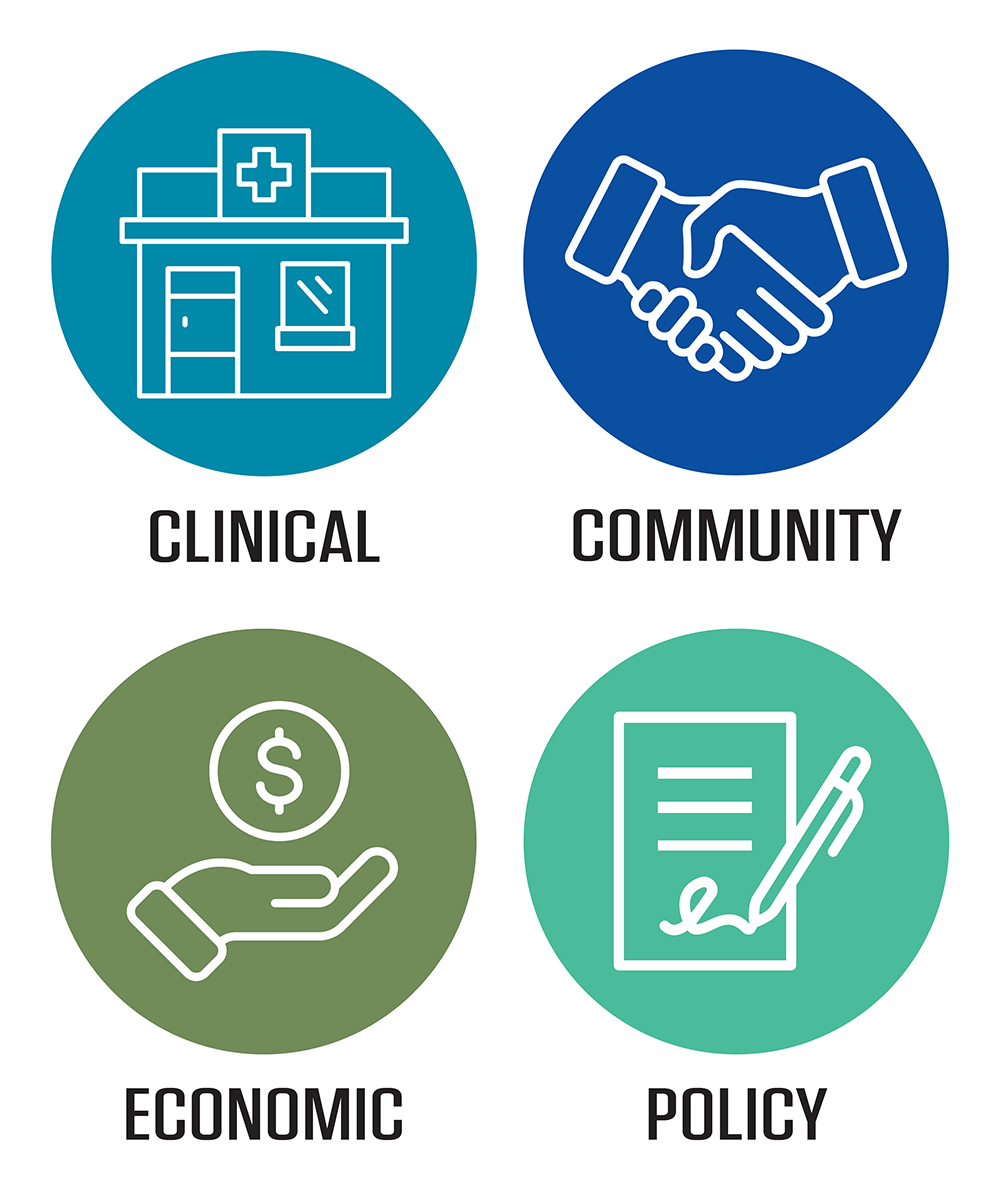
This research has clinical, community, economic, and policy implications. The framework for these implications was derived from the Translational Science Benefits Model created by the Institute of Clinical & Translational Sciences at Washington University in St. Louis.

Funding

Tae Jones is supported by a TL1 grant provided by the Institute of Translational Health Sciences. The project is also supported by grant number R01CA244171 through the National Cancer Institute of the National Institution of Health.

References

  1. Hartung TJ, Brähler E, Faller H, Härter M, Hinz A, Johansen C, Keller M, Koch U, Schulz H, Weis J, Mehnert A. The risk of being depressed is significantly higher in cancer patients than in the general population: Prevalence and severity of depressive symptoms across major cancer types. Eur J Cancer. 2017 Feb;72:46-53. doi: 10.1016/j.ejca.2016.11.017. Epub 2016 Dec 23. PMID: 28024266.
  2. Thota AB, Sipe TA, Byard GJ, Zometa CS, Hahn RA, McKnight-Eily LR, Chapman DP, Abraido-Lanza AF, Pearson JL, Anderson CW, Gelenberg AJ, Hennessy KD, Duffy FF, Vernon-Smiley ME, Nease DE Jr, Williams SP; Community Preventive Services Task Force. Collaborative care to improve the management of depressive disorders: a community guide systematic review and meta-analysis. Am J Prev Med. 2012 May;42(5):525-38. doi: 10.1016/j.amepre.2012.01.019. PMID: 22516495.
  3. Suh J, Williams S, Fann JR, Fogarty J, Bauer AM, Hsieh G. Parallel Journeys of Patients with Cancer and Depression: Challenges and Opportunities for Technology-Enabled Collaborative Care. Proc ACM Hum Comput Interact. 2020 May;4(CSCW1):38. doi: 10.1145/3392843. PMID: 32656502; PMCID: PMC7351346.

Research Team

Jesse Fann, MD, MPH; Lydia Andris, MPA; Ben Zheng, MHS; Caitlin Palacio; Patricia Arean, PhD; Nicole Bates, MD; Amy Bauer, MD, MS; Ian Bennett, MD, PhD; Diane Powers, MA, MBA; Isaac Rhew, PhD; Ty Lostutter, PhD all of the UW Dept. of Psychiatry and Behavioral Sciences; Gary Hsieh of the UW Dept of Human Centered Design and Engineering; Blair Irwin, MD, MBA, Multicare Regional Cancer Center; Dan Martin, MD UW Dept of Medicine; Taryn Lindhorst, PhD, UW School of Social Work;  James Fogarty, PhD; Tae Jones, Anant Mittal, Jina Suh, and Ravi Karkar, PhD, of UW Department of Computer Science and Engineering

Learn More About the Project

Learn More About the Topic

Preliminary studies have found that treating depression in cancer improves quality of life but not length of life.  Here are the American Psychological Association’s recommendations. Here are the American Cancer Society’s recommendations for treating co-occurring cancer and depression.