12 Feb Meet Dave: The Newest Member of the ITHS Technology Development Center
In this installment of the ITHS profile series, we sat down with our newest member of the ITHS Technology Development Center (TDC), David Hammond, MS, RAC, CCRP. Hammond is an Associate Professor at the School of Pharmacy at the University of Washington and the Director of the BRAMS (Biomedical Regulatory Affairs MS) program. He joined ITHS in the fall of 2025 as a Senior Regulatory Consultant and Advisor.
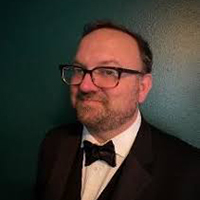
David Hammond
In this conversation, Hammond dives into his career in biomedical regulatory affairs and breaks down how the ITHS Technology Development Center (TDC) can help investigators navigate the intimidating process of FDA regulatory pathways.
Hi Dave, welcome to ITHS and thank you for taking the time to talk to us! Could you start by sharing a little bit about your professional background?
Absolutely! I began working in the FDA-regulated field in the mid-90s doing clinical research for pharmaceuticals. After college, I spent three to four years in Seattle working with several groups focused on pharmaceutical studies. From there, I transitioned into industry work. Over the years, I worked for big companies like Boston Scientific, Medtronic, and Philips as well as very small companies that were not well known to the public. Altogether, I have been in this field for 30 years.
In terms of my teaching career, I began teaching at the University of Washington in 2005 and have been consulting since 2008. Over the years, I have held VP positions of regulatory and clinical research for all sorts of medical device companies.
You offer much-needed regulatory consultation support to investigators. How did ITHS help make that happen?
Regulatory affairs is an area that many people don’t really understand. At the university, people are fantastic with technological advancements, medical breakthroughs, scientific discoveries, and all other innovations. They come up with brilliant ideas, but when it comes to moving those innovations to market, the FDA can feel overwhelming and intimidating, and that’s where people need the most help. And over time, I realized that investigators need so much more support and guidance than a single conversation. They needed ongoing support with next steps, timelines, and who to contact – and I was able to provide that support until my position changed at the university and I couldn’t do that anymore.
That’s where ITHS came in. ITHS gave me a way to return to this work I had been doing informally, providing sustained long-term support. There aren’t many people who do this type of work, and the things we create here are incredibly exciting and cutting-edge. However, if we cannot get them through the FDA, they will never reach the world.
What are some of the most common challenges faced by investigators when navigating regulatory pathways?
The first challenge is to determine how a product is categorized. For example, is your product a device? If so, what class is it? The FDA uses different classifications to determine the regulatory pathway for each product. The second most common challenge is understanding the difference between research and development. Universities are excellent at research and discovery, but development is more of a structured and controlled process. Overall, people struggle the most during the transition phase from innovation to a fully developed product that meets FDA requirements. Additionally, the regulatory realm is a moving target. The FDA evolves over time, and in my 30 years in this field, the rules have shifted many times. This is because the FDA is a reactionary agency, meaning when something happens in the real world, the FDA adjusts.
What are you most looking forward to in this role?
I am most excited about helping move discoveries from the lab into development, navigate regulatory hurdles, and ultimately reach the market. That’s where we have the most real-world impact on human health.
A big part of that process is also about helping researchers answer questions they will face when seeking funding. For example, investors will always ask about the FDA plan, and that is often one of the most difficult questions for scientists and engineers to answer. My goal is to provide the support needed for our investigators to move their innovation beyond the lab and into the real world.
Where do you think your expertise will be most impactful?
I believe I can make the greatest impact by helping researchers and designers understand the very realistic steps between where they are now and market entry. The FDA understands the field and the need, but they cannot approve things without the right evidence. Helping people understand that process is what this work is really about.
What do you think investigators should know about TDC?
First, people need to know that we exist. We are an impactful resource within the university, and we are here to help. Investigators need to know what we offer and the specific types of expertise we provide to support their work. The best thing they can do is talk to us early on and figure things out together. We offer free initial consultations and people can request this service by visiting the TDC website linked here.
Thank you, Dave!