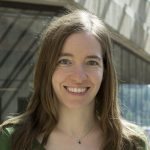
For this installment of the ITHS Profile Series, we spoke with Mandy Fretts, PhD, MPH, Distinguished Faculty for the ITHS KL2 Program, as well as a KL2 Program alumna. Dr. Fretts is also an Associate Professor in the UW School of Public Health’s Department of Epidemiology and one of the co-Principal Investigators of the Strong Heart Study, an NIH-funded study of cardiovascular disease and its risk factors among American Indian people that started in 1988. It is the largest and longest ongoing epidemiological study of heart health in American Indian communities.
We discussed how watching family members cope with diabetes has informed her research, how the protected time and resources of the KL2 program helped kickstart her career, and the real-world impact of her work.
Can you tell us a little bit about your educational background?
Mandy Fretts, PhD, MPH
I knew I wanted to focus my work on American Indian health and diabetes. When exploring graduate school options, I connected with Dr. Barbara Howard, one of the Principal Investigators of the Strong Heart Study and a scientist at MedStar Health Research Institute in Washington D.C. I also connected with Dr. David Siscovick at the University of Washington. Dr. Siscovick was co-leading a T32 training grant funded by the National Heart, Lung, and Blood Institute (NHLBI) to support graduate students interested in cardio-metabolic diseases. I ended up moving to Seattle and coming to the UW with the intention of working with the Strong Heart Study.
My MPH thesis focused on better understanding the relationship of physical activity with incident diabetes in middle-aged or older American Indians who were part of the Strong Heart Study. Then I stayed at UW for the PhD program and continued to work with the Strong Heart Study. For my dissertation, I focused on better understanding the effects of both diet and ambulatory activity on diabetes risk in younger American Indians who were part of the study.
As a post-doc, I expanded my research portfolio to learn more about genetic epidemiology. I spent time writing manuscripts to explore gene/lifestyle interactions on cardiometabolic health, specifically using data from the Strong Heart Study, as well as other large studies that are funded by the NHLBI.
And is there a reason why you’re so interested in American Indian health?
I’m a citizen of Eel Ground First Nation, and my dad, who was Mi’kmaq, died from complications related to diabetes when he was in his 50s. Obesity and diabetes are very common in American Indian people—and many of my family members live with diabetes, including my grandmother, dad, aunts, uncles, and cousins.
When I was small, I have very distinct memories of my grandmother talking about having to give herself insulin to help control her blood sugar. I really didn’t really understand the disease, and, because it was so common, I just thought it was part of aging, like, you know, getting gray hair. It’s just something that happens as you get older.
When I was in college, I spent a semester studying in New Zealand. I took lots of classes on Maori health. Similar to American Indian people, Maori people have a much higher risk of diabetes than other populations. I learned that many of the risk factors for diabetes are modifiable. Diabetes is not just a part of aging. I also learned that many of the risk factors for diabetes are structural—where you live, your access to healthcare, your access to food, all these things impact your risk.
When I came back to the States, I was determined to pursue advanced studies in epidemiology with a focus on American Indian health and diabetes.
How did you get connected with ITHS and how did it help you toward your goal?
When I was a postdoctoral fellow in 2013, I learned about the ITHS KL2 program. At that time, I was getting really frustrated with the general “lifecourse” of epidemiology projects in the academy. It seemed like the main goal of research was peer-reviewed publications, the typical timeline being you develop a research question, write a proposal, analyze the data, write up the results, specifically for a peer scientific audience, publish your findings, and then move on to the next scientific question of interest. There is no doubt that is of high scientific importance, but it seemed like a lot of missed opportunities to move the needle on cardiometabolic health in the community. I decided to apply to the KL2 program to develop my qualitative research skills and to work in partnership with Strong Heart Study communities to develop focused interventions that are informed by observational studies to combat cardiometabolic diseases.
How did joining the KL2 help you achieve your goal of developing skills and working with communities?
I was awarded a four-year KL2 in 2014. This provided me time and funds to work closely with one of the Strong Heart Study communities, a large tribal community in the Great Plains, to really understand the major barriers and facilitators to why people eat what they eat. This included both looking at individual level factors, such as food knowledge, family food preferences, and income, but also at community-level factors, including the number of food stores in your community, the types of foods that the stores offer, and the cost of food. We did a big listening session to understand the types of programs that are available locally related to diet and diabetes, heart disease, and other health outcomes, and to identify any gaps that need to be filled. From that feasibility project, I was able to collect the preliminary data that I needed to apply for a bigger R01 grant to develop and test a healthy food budgeting, purchasing, and cooking intervention for adults with diabetes.
The KL2 gave us the resources and protected time needed to develop that partnership with community.
The KL2 is a very special program, and I think a highlight is the opportunity to work with faculty across the spectrum of translational sciences. In typical K awards, you identify a mentoring team who has expertise in your area of interest. But through the ITHS KL2, you have the opportunity to not only learn from your mentors with content expertise, but also work with other scientists in lots of different fields. You learn how to advocate your ideas to a wide range of audiences who may have expertise in vastly different areas from yours. There might be scientists who are working with mice, or clinicians who are working with different cell models, or social scientists who are working in medical care settings. The opportunity to share your research ideas with others who have different backgrounds and perspectives makes your science stronger.
And now you’re distinguished faculty in the KL2 program. How are you supporting that next generation of Ks?
I’ve been in the role of Distinguished Faculty for about two years now, and my role is to provide guidance to the current KL2 scholars. I provide input to whatever is being discussed at our monthly seminars, including providing feedback on scholar’s materials for any upcoming scientific or academic conferences or providing feedback on specific aims pages for upcoming grant applications. Beyond scientific topics, I offer advice on things as basic as time management since it can be challenging for junior faculty to manage juggling grant writing with manuscript writing, teaching, and service work. I really benefited from this program when I was junior faculty.
I had wonderful mentors who were really critical to my success, so I’m trying to do the same for younger faculty.
You’re also the Site PI for the Strong Heart Study for the Dakotas. What is your role there?
The Strong Heart Study has 5 co-PIs. This includes 3 field site PIs in Arizona, the Dakotas (which is me), and Oklahoma, a PI of the coordinating center, and a PI of the genetic data center at the Texas Biomedical Research Institute. As I mentioned before, the Strong Heart Study is the longest ongoing and largest epidemiological study of heart health in 12 American Indian communities. And it’s been funded by the NHLBI for about 35 years. It was started in 1988, because at the time, there was little information on heart disease in American Indian populations. And in fact, due to limited data, many thought that American Indian people don’t get heart disease. And it’s because of the Strong Heart Study that we know that the burden of heart disease in American Indian people is very high.
So, the way this study is set up is that participants come in for in-person exams every 5 to 8 years?
Yes—really comprehensive examinations. This includes a physical exam, laboratory workup, and personal interview. The types of data collected is very diverse, anything from blood pressure to perceived social support to diet quality. A lot of my work as a PI is just helping to make sure that the exam stays on track and to work with the folks in the field to ensure that high quality data is being collected, and help with any sort of troubleshooting. I also write papers, mentor students and junior faculty working with the data, and make sure all study approvals—include university and tribal IRBs—are in place.
What we know now is very different than what we knew in 1988, so the exam components have evolved over time. In addition to the traditional risk factors for heart disease that we have collected across all exams, such as blood pressure, smoking, and lipids, at the most recent exam that we just completed last year, we collected data on the food environment, for instance,where you live in relation to fast food joints, grocery stores, and convenience stores. We also collected data on the microbiome. These types of data were not on people’s radar in 1988.
Now we’re working with our community partners to try to figure out what we want the next phase to look like. Again, everything is done with community input, so a big component of being a part of the study is serving as a liaison between the academic researchers and the community to make sure that we are focusing on any strengths or challenges that are relevant and important to the community.
Has any other study stemmed from the data collection in the KL2 program?
The other project that we’ve worked on, which evolved from a Strong Heart Study, is the Cooking for Health Study.
So now the challenge is, how do we move the needle on heart health?
A lot of the data that I collected as part of the KL2 program was used to inform the Cooking for Health Study, which we just completed. Cooking for Health was funded by NIMHD and was designed to develop and test a healthy food budgeting, purchasing, and cooking intervention for American Indian people who have type 2 diabetes. With community feedback, we decided to do a 12-month intervention focused on developing food budgeting and cooking skills, one hour per month. Participants were asked to watch several short cooking videos per month that highlighted specific recipes using locally available foods and/or “how-to” videos on unit pricing, reading nutrition labels, measuring wet and dry ingredients, knife skills. All videos were hard-downloaded on tablets since a lot of people don’t have reliable access to the internet, and we wanted to make sure they could watch the videos at any time.
The goal was that at the end of the 12 months, individuals would have better food knowledge and cooking skills, leading to better health. We’re still writing up the results, but participating in the intervention increased food knowledge and cooking skills, and lowered BMI. So, it was very effective.
Have any policy change recommendations come from either that or the Strong Heart Study?
The Strong Heart Study has had hundreds of publications since its inception that have informed community interventions to optimize health, but policy change at the federal level can be slow. When I was a graduate student, one of my first publications was focused on the association of meat intake with diabetes risk in the Strong Heart Study. More than 45% of study participants in the Strong Heart Study reported consuming processed meat two or more times a week. Participants who consumed two or more servings of processed meat per week had a two-fold higher risk of developing diabetes when compared to participants who reported never consuming processed meat. The paper got national press and along with that, interest from the communities. Since the publication, the USDA has transitioned from offering canned meats as part of the Food Distribution Program on Indian Reservations (also known as commodity foods) to offering frozen or fresh meat in many communities. This is a healthier alternative.
That’s great. So it’s a move in the right direction. Thanks for talking to us today.