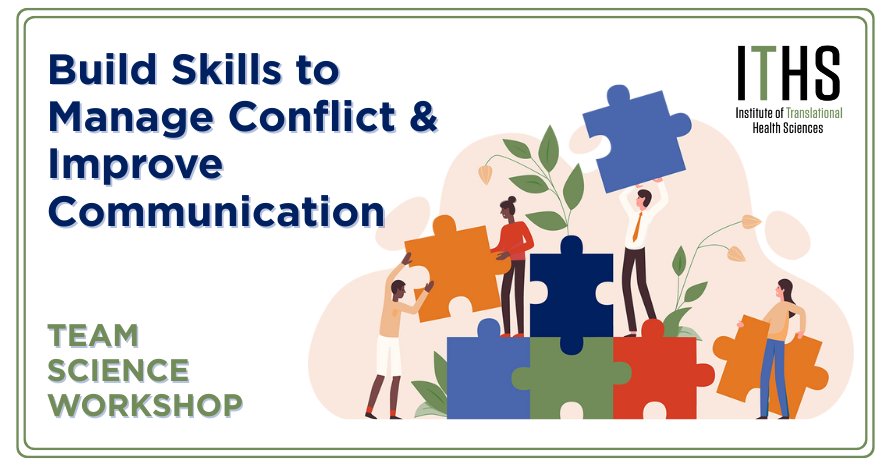
28 Jan Build Skills to Manage Conflict & Improve Communication
1959 NE Pacific Street
Seattle
WA 98195
Workshop Description
Use professional social style and conflict mode assessments to better understand how you communicate with your team in this in-person Team Science Workshop. Effective team science depends not only on technical expertise, but on strong interpersonal skills—how we communicate, navigate differences, and respond to conflict under real-world pressure. This in-person 3-hour interactive workshop equips participants with practical tools to improve communication, navigate differences, and manage conflict in ways that strengthen collaboration, trust, and productivity. Come in teams or as individuals.
Participants will be introduced to two evidence-based frameworks widely used in team and leadership development: the SOCIAL STYLE® Profile and the Thomas-Kilmann Conflict Mode Instrument (TKI®). Through brief didactic content, reflection, and applied discussion, participants will increase self-awareness of their communication and conflict preferences and improve their versatility in adapting their behavior to others. Emphasis is placed on applying these skills to real-world research team scenarios, including interdisciplinary collaboration, role-based power dynamics, and competing priorities.
By the end of the session, participants will be equipped to communicate more effectively, manage conflict constructively, and contribute to healthier, more resilient research teams.
Pre-Work
- Each participant will be sent instructions before the workshop to complete the TKI and the Social Style Profile. Assessment costs (a $100 value) are covered by ITHS for participants in this workshop.
- Assessments take about 90 minutes to complete
Who Should Attend
- Faculty investigators, research staff, and trainees
- Interdisciplinary research teams (previously established or newly forming)
- Individuals seeking to strengthen communication and conflict management skills in research settings
- CTSA-affiliated scholars and team members engaged in collaborative science
What You’ll Walk Away With
- A clearer understanding of your own communication style and dominant conflict modes
- Practical strategies for adapting your behavior to work more effectively with different styles
- Tools for choosing constructive conflict approaches tailored to specific situations
- Actionable skills to improve trust, collaboration, and team functioning in research settings
Registration
Registration for this event is full, but please click below if you wish to be added to the waitlist. We will reach out to you if space becomes available.
If you have any questions about the workshop, please contact Laurel Barchet (lah19@uw.edu).
About the Frameworks
Social Style Profile
- Develop and expand your basic understanding of your Social Style. Recognize how to enhance effectiveness in working with the other three styles
- Learn to adapt your behavior (versatility) to others to foster better communication, reduce conflict and build trust.
- Improve relationships by showing empathy and meeting others’ needs
Thomas-Kilmann Conflict Mode Instrument (TKI)
- Provides a framework (TKI) for understanding conflict modes
- Enhances self-awareness to help individuals recognize their dominant conflict style
- Builds skills and flexibility to equip people with strategies to choose the most appropriate conflict mode for given situations
- Promotes constructive outcomes by creating solutions that improve relationships, trust, and productivity
About the Speakers
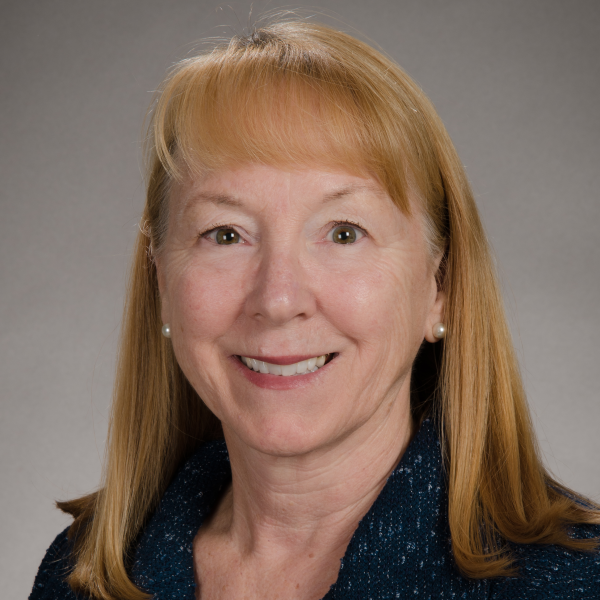 Brenda K. Zierler, PhD, RN, FAAN, is a Professor and Chair in the Department of Biobehavioral Nursing and Health Informatics in the University of Washington (UW) School of Nursing and co-lead of the ITHS Team Science Module. Dr. Zierler conducts interdisciplinary research that advances the fields of interprofessional collaborative practice, team science, implementation science, and quality improvement to improve team and patient outcomes. Dr. Zierler teaches Team Science and Leadership in the PhD program and Quality Improvement, Patient Safety and Informatics in the undergraduate nursing program. Her primary appointment is in the UW School of Nursing but she holds three adjunct appointments – two in the UW School of Medicine (Department of Surgery, Division of Vascular Surgery & Department of Biomedical Informatics and Medical Education) and one in the UW School of Public Health (Department of Health Systems and Population Health).
Erin Abu-Rish Blakeney, PhD, RN, is a co-lead of the ITHS Team Science Module and Research Associate Professor in the Department of Biobehavioral Nursing and Health Informatics at the UW School of Nursing. Dr. Blakeney’s program of research focuses on how teams work together and how their teamwork influences the production of new knowledge and translation of research into practice along the entire classroom to bench to bedside spectrum. She has nearly 15 years of experience developing, implementing, and evaluating team approaches to interdisciplinary education, healthcare, and research.
 Jennifer Sprecher, MS, is Director of Strategy Development and Deployment with the School of Nursing. Ms. Sprecher works with organizations to achieve excellence through Strategy development, Lean Project Management, balanced scorecards, change management, benchmarking, team problem solving, team and leadership coaching.
Ms. Sprecher is a strong team facilitator, called upon to facilitate high-level teams where interaction and reaching objectives are critical. Sample facilitations include strategic planning, building collaborations, designing and developing new services, products and processes, implementing process improvements, implementing research studies and creating new research centers. She has worked extensively in the past few years within the arena of team science and applying team concepts to innovative development and research teams.
Before the UW School of Nursing, Ms. Sprecher focused exclusively on health research in the Institute of Translational Health Sciences, also within the University of WA. Prior to the UW, she spent 7 years as Executive Director of the Washington State Quality Award (WSQA), a Baldrige-based non-profit organization. With a background in Industrial Engineering, Ms. Sprecher has been working with process improvement for over 25 years using continuous process improvement methods including Lean, Lean-Sigma, Plan Do Check Act and 6S (5S workplace organization combined with Safety) and Total Quality Management.
Ms. Sprecher has a bachelor’s degree in Industrial Engineering, a Master’s of Science in Management Systems, is a certified Lean Six Sigma Black Belt and an International Coaching Federation ACC certified Leadership Coach.